

M18 · Supporting study course · 6 lessons
Myth, Sacred Art and Gnostic Interpretation
Read myth and sacred art through original context, later commentary and personal response, with a small interpretive project that keeps an alternative visible.
Begin lesson oneSee the lessons
Open lessons · No account, assessment or spiritual rank
What this course is for
A story or image can teach through beauty, surprise and memory. Its power does not remove the need to distinguish a work’s setting from a later interpretation. This course makes room for symbolic depth while keeping authors, cultures and evidence visible.
We move through the Aeneid, Parsifal and the Ring of the Nibelung, Mesoamerican material, and a Hermetic/Daoist comparison. The final project is only one scene in three labelled parts, with another possible reading and a modest practical reminder. You do not need to master every mythology or perform a ritual.
Readiness: Reading Wisdom (F08) and Samael’s Framework (F10), or equivalent source literacy. No art training, music subscription, travel, visualisation or religious affiliation is needed. Text descriptions support image and performance alternatives.
- Distinguish story, historical claim, commentary and personal application.
- Read one scene with a source and an alternative interpretation.
- Carry a reasonable reminder into one ordinary response without claiming a culture’s hidden universal meaning.
Take one lesson at a time. Read its explanation and example, prepare the single activity, then review the attempt. Fictional work is a complete study route; it does not establish how you will respond in life. No journal, streak or personal submission is required.
Much has been written in life; yet, it is necessary to delve profoundly
The chapter’s opening invitation to deeper reading, before the author’s claims about Wagner’s esoteric status.
Put it into practice. Look at one scene closely and name the evidence for each added interpretation.
Your course, step by step
- Literal story, symbol and evidenceGive a scene three distinct labels before making a historical or personal claim.
- Greek and Roman mythsSeparate Virgil’s Delos scene from Samael’s later Kundalini comparison.
- Norse stories and WagnerDistinguish Wagner’s dramatic action, a mediated synopsis and a later esoteric reading.
- Mesoamerican texts and living communitiesIdentify a mediated source chain and keep Maya and Nahua contexts distinct.
- Hermetic and Daoist comparisonsCompare two images without claiming that resemblance establishes identical traditions or methods.
- An accountable interpretive projectFinish one small three-part reading with an alternative and a reasonable practical response.
Keep the work proportionate
No reenactment of violence, ritual, entity contact or claim of Indigenous initiation is assigned. Modern racial hierarchies and stereotypes are not adopted as historical or spiritual facts. Vivid scenes can be replaced with the short summaries; no one must view distressing art to complete a lesson.
Find Help and every other course remain available without completing this sequence.
Credited teaching and our contribution
Virgil, Wagner and the Dao De Jing remain distinct works in named English presentations. Samael’s Oracle of Apollo, Parsifal and Anahuac material are later interpretations or mediated retellings. Smithsonian’s NMAI resources keep living Maya contexts visible. Our comparison is educational support, not a claim to speak for these communities.
Aeneid, Book III
Aeneid, Book III (opens in a new tab)
Virgil, translated by John Dryden; Internet Classics Archive, MIT.
Relevant passage: Delos scene: Aeneas asks Apollo about settlement and receives an ancestral-land answer.
An epic scene, not a modern instruction to seek an oracle. Distinct from the Cumaean Sibyl episode in Book VI.
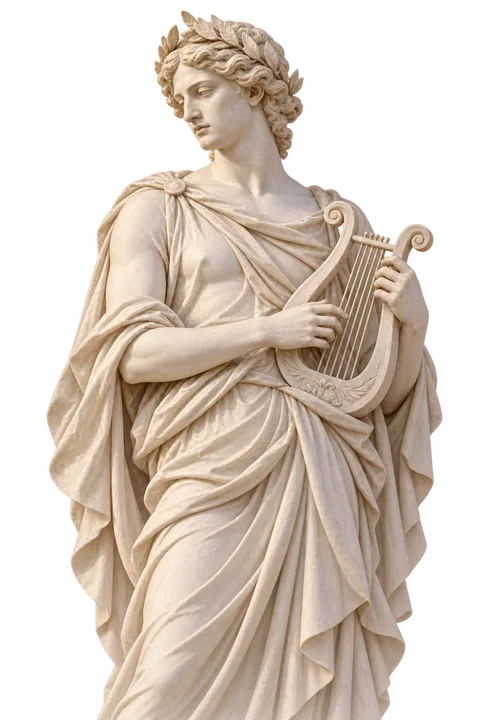
The Oracle of Apollo
The Oracle of Apollo (opens in a new tab)
Samael Aun Weor, Magic of the Runes, chapter 9; Glorian English edition.
Relevant passage: Delos retelling and bracketed Divine Mother/Kundalini interpretation.
Later Gnostic commentary, not proof of Virgil’s historical intention or the chapter’s extraordinary historical claims.
Parsifal: Act 1
Parsifal: Act 1 (opens in a new tab)
Richard Wagner, Parsifal libretto in Glorian’s English presentation; translator not identified on the act page.
Relevant passage: Swan scene: Gurnemanz questions Parsifal and Parsifal breaks his bow.
Literary action within an opera, not a student instruction to harm an animal or destroy an object. Wider performance is optional.
Parsifal Unveiled: chapter 1
Parsifal Unveiled: chapter 1 (opens in a new tab)
Samael Aun Weor, Glorian English edition.
Relevant passage: Opening interpretive purpose and claims about Wagner’s esoteric status.
These are Samael’s claims. They do not establish that Wagner historically held every later Gnostic doctrine or make all chronology claims reliable.
Das Rheingold: synopsis
Das Rheingold: synopsis (opens in a new tab)
Glorian, Ring of the Nibelungen Explained, presented as a Gnostic Instructor transcription; individual author/earlier synopsis provenance not identified on page.
Relevant passage: Opening Rhinegold scene through Alberich taking the treasure; the larger synopsis is not assigned.
A mediated synopsis, not the original German libretto or independent proof of ancient Norse beliefs. We do not adopt its physical-appearance stereotypes.
The Seven Celestial Caves
The Seven Celestial Caves (opens in a new tab)
Samael Aun Weor, Secret Doctrine of Anahuac, chapter 1; Glorian English edition.
Relevant passage: Opening paragraph identifies Diego Durán through Mario Roso de Luna as a mediated source; selected following narrative inspected for context.
A colonial-account/later-retelling chain, not an unmediated Indigenous voice or proof of the supernatural journey.
Living Maya Time
Living Maya Time (opens in a new tab)
National Museum of the American Indian, Native Knowledge 360°.
Relevant passage: Resource overview, Maya People and calendar/2012 opinion sections identified.
Overview checked; not every video or activity reviewed. Living communities are not reduced to modern esoteric forecasts.
The Creation Story of the Maya: record
The Creation Story of the Maya: record (opens in a new tab)
National Museum of the American Indian.
Relevant passage: Description identifies the Popol Vuh, creation and Hero Twins.
The record description was read; video playback is not claimed or required.
Dao De Jing / Tao Teh King
Dao De Jing / Tao Teh King (opens in a new tab)
Attributed to Laozi; James Legge translation, Project Gutenberg ebook 216.
Relevant passage: Chapter 8 opening water comparison, checked in the available web text.
A named historical translation, not every Daoist interpretation. No breath or alchemical method is inferred from the metaphor.
The Emerald Tablet
The Emerald Tablet (opens in a new tab)
Attributed to Hermes Trismegistus, as printed with Samael’s Tarot and Kabbalah; English translator not identified there.
Relevant passage: Opening superior/inferior correspondence sentences.
An attributed Hermetic text, not laboratory instructions or proof that Daoist and Hermetic traditions are historically identical.
Return to the practical work
The exercises stay with their preparation, alternatives and reflection.